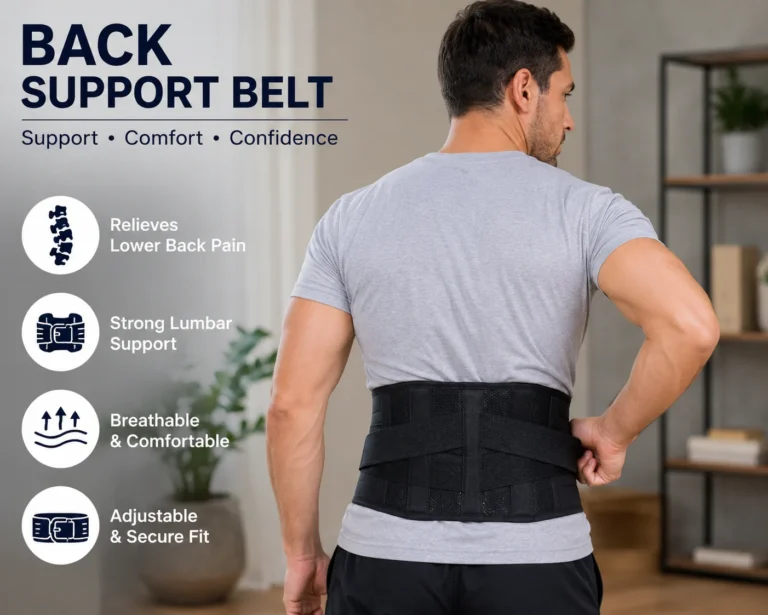
Back pain is one of the most common musculoskeletal complaints worldwide, affecting people of all ages and occupations. Whether caused by prolonged sitting, repetitive lifting, poor posture, or an existing back condition, discomfort in the lower back can interfere with daily life and productivity. As a result, many people consider using a back support belt to improve comfort and stability.
A back support belt, sometimes called a back brace or lumbar support belt, is designed to provide compression and support around the lower back and abdomen. While these devices can help some individuals manage symptoms and maintain better posture, they are not a cure for back pain and should be used appropriately. This guide explains how back support belts work, their potential benefits, limitations, and how to choose the right one for your needs.
What Is a Back Support Belt?
A back support belt is a wearable device that wraps around the lower back and midsection to provide compression and support to the lumbar spine. Most belts are made from elastic materials and include adjustable straps that allow users to customize the fit.
These products are commonly used by people who perform physically demanding work, engage in heavy lifting, recover from certain injuries, or experience recurring lower back discomfort. Some designs focus on light support for daily activities, while others provide more rigid stabilization for specific medical conditions.
The primary goal of a back support belt is to help users feel more supported during movement and reduce strain on the lower back.
How Does a Back Support Belt Work?
Compression and Stability
Most back support belts work by applying gentle compression around the abdomen and lower back. This compression may increase body awareness and encourage users to maintain better posture during everyday activities.
The belt can also create a sensation of stability that helps some individuals feel more confident when moving, bending, or lifting. For people experiencing mild discomfort, this added support can provide temporary relief.
However, research has not conclusively shown that workplace back belts prevent back injuries or significantly reduce back pain across large populations. Evidence remains mixed, particularly regarding injury prevention.
Posture Awareness
Many users report that a back support belt serves as a reminder to avoid awkward movements and maintain a more neutral spine position. The physical presence of the belt can make excessive twisting, bending, or slouching feel less comfortable.
While this awareness may encourage healthier movement habits, experts caution that belts should complement proper lifting techniques and ergonomic practices rather than replace them.
Temporary Support During Activity
Back support belts are often used during periods of increased physical demand, such as moving furniture, warehouse work, gardening, or certain sports activities.
In these situations, the belt may provide a sense of support that helps users perform tasks more comfortably. However, relying exclusively on a belt without strengthening the core and back muscles may not address the underlying causes of discomfort.
Benefits of Using a Back Support Belt
May Help Reduce Discomfort
One of the most commonly reported benefits is temporary pain relief. Compression and support can help reduce the sensation of strain during activities that would otherwise aggravate the lower back.
People recovering from minor strains or experiencing occasional discomfort may find that wearing a belt allows them to move more comfortably while healing.
It is important to remember that symptom relief does not necessarily mean the underlying issue has been resolved.
Supports Certain Daily Activities
Individuals who spend long hours standing, walking, or lifting often use back support belts during work. The belt may provide additional comfort during physically demanding tasks.
Some users also wear lumbar support belts during household chores, travel, or recreational activities where prolonged standing or repetitive movements are involved.
The level of benefit varies significantly between individuals and depends on the specific cause of back pain.
Can Encourage Better Body Mechanics
A properly fitted belt may help users become more mindful of posture and movement patterns. This awareness can support safer lifting habits and reduce unnecessary strain on the lower back.
When combined with ergonomic improvements and proper exercise, a belt may become one component of a broader back-care strategy.
Limitations and Risks
Not Proven to Prevent Workplace Injuries
Many people assume that back support belts prevent lifting-related injuries. However, major reviews and occupational health agencies have found insufficient evidence to support claims that back belts significantly reduce workplace back injuries.
The National Institute for Occupational Safety and Health (NIOSH) has repeatedly stated that employers should not rely on back belts as a primary injury-prevention strategy.
Instead, proper lifting techniques, ergonomic workplace design, and physical conditioning remain the most important preventive measures.
Risk of Overreliance
One concern among healthcare professionals is that some individuals may become overly dependent on a back support belt. If worn excessively, users may rely on external support instead of maintaining strong core muscles.
Although occasional use is generally considered acceptable, long-term dependence without an exercise program may be counterproductive for some people.
Maintaining core strength remains an important part of long-term spinal health.
May Create a False Sense of Security
Research has suggested that some workers feel capable of lifting heavier loads when wearing a back belt. This false sense of security could potentially increase risk if individuals attempt tasks beyond their physical capabilities.
A belt should never be viewed as protective equipment that eliminates the need for safe lifting practices.
Types of Back Support Belts
Flexible Lumbar Support Belts
These lightweight belts are commonly used for mild support during daily activities. They are comfortable, breathable, and suitable for extended wear.
Flexible belts are often chosen by office workers, drivers, and individuals seeking occasional support throughout the day.
Heavy-Duty Work Belts
Work belts are designed for occupations involving frequent lifting and manual labor. They usually feature wider support panels and adjustable tension straps.
Although popular in industrial settings, evidence supporting their ability to prevent injury remains limited.
Medical Back Braces
Medical-grade braces provide more structured support and are often prescribed following surgery, injury, or specific spinal conditions.
These devices should generally be used under the guidance of a healthcare professional who can determine whether additional stabilization is appropriate.
How to Choose the Right Back Support Belt
Consider Your Intended Use
The best back support belt depends on how you plan to use it. Someone seeking occasional comfort during desk work may need a different product than a warehouse employee or an athlete.
Understanding your primary goal helps narrow down the available options.
Focus on Proper Fit
A belt that is too loose may provide little benefit, while one that is too tight can restrict breathing and movement.
Look for adjustable straps and follow manufacturer sizing guidelines carefully. Proper fit is often more important than advanced features.
Prioritize Comfort and Breathability
If you plan to wear a belt for several hours, breathable materials and lightweight construction can significantly improve comfort.
Many modern designs use moisture-wicking fabrics that reduce heat buildup during prolonged use.
Frequently Asked Questions
Q: What is a back support belt used for?
A: A back support belt is used to provide compression and support around the lower back and abdomen. Many people wear it to manage discomfort, improve posture awareness, or feel more supported during physical activities.
Q: Does a back support belt prevent back injuries?
A: Current research has not conclusively shown that back support belts prevent workplace back injuries. Occupational health agencies generally recommend proper lifting techniques and ergonomic improvements as primary injury-prevention strategies.
Q: Can I wear a back support belt every day?
A: Some people wear back support belts daily, but long-term use should be balanced with exercises that strengthen the core and back muscles. If pain persists, consulting a healthcare professional is advisable.
Q: Are back support belts good for lower back pain?
A: They may provide temporary relief and support for some individuals with lower back discomfort. Results vary depending on the underlying cause of pain and the specific type of belt used.
Q: Should I use a back support belt when lifting weights?
A: Weightlifting belts and general back support belts serve different purposes. Experienced lifters sometimes use lifting belts during heavy compound exercises, but proper technique and core bracing remain essential.
Conclusion
A back support belt can be a useful tool for managing temporary discomfort, improving posture awareness, and providing additional support during physically demanding activities. Many users find that these devices help them feel more stable and comfortable throughout the day.
However, a belt should not be viewed as a guaranteed solution for back pain or injury prevention. Scientific evidence regarding workplace injury reduction remains inconclusive, and experts continue to emphasize the importance of exercise, proper lifting mechanics, ergonomic improvements, and overall physical conditioning. When used as part of a comprehensive back-care strategy, a back support belt may offer valuable support while helping individuals stay active and comfortable.