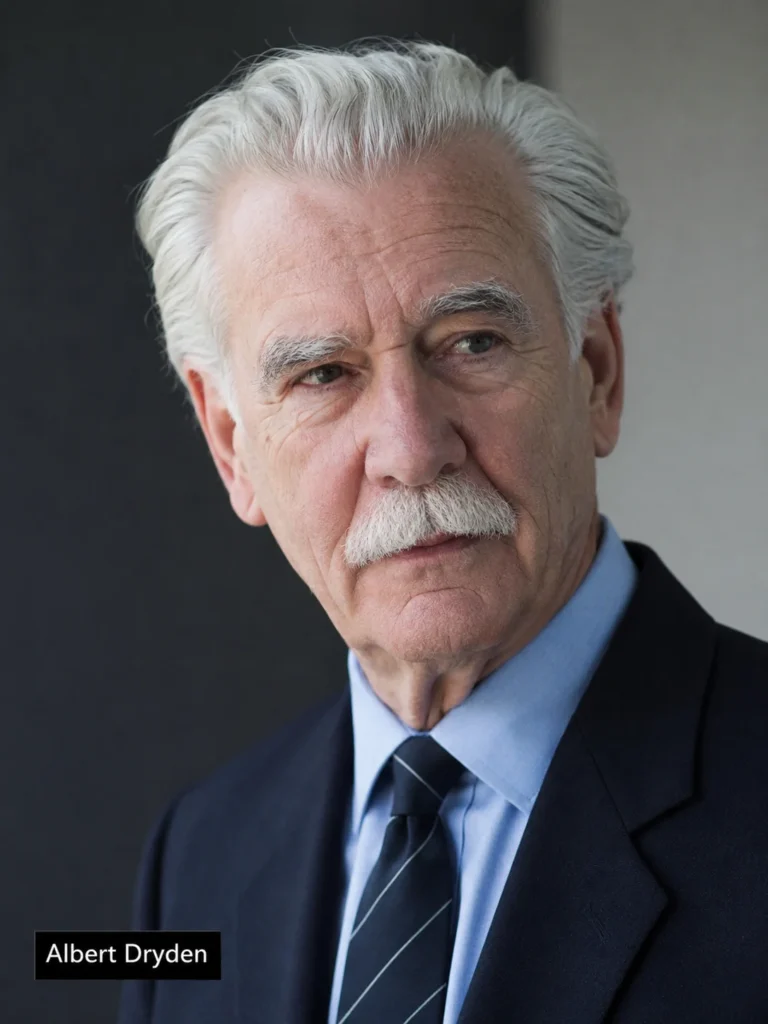
Few criminal cases in modern British history have remained as controversial and widely discussed as the Albert Dryden case. His name became known across the United Kingdom on June 20, 1991,albert dryden, when a confrontation over an illegally built property escalated into a fatal shooting that was captured on television cameras.
The incident shocked the nation not only because of its violence but also because it unfolded in front of journalists, council officials, and police officers. More than three decades later, the case continues to be examined by historians, legal experts, journalists, and true-crime researchers as an example of how a long-running dispute can spiral into tragedy.
This article explores Albert Dryden’s life, the planning dispute that made headlines, albert dryden,the events of June 1991, his trial, imprisonment, and the lasting impact of one of Britain’s most notorious criminal cases.
Who Was Albert Dryden? A Short Biography
| Information | Details |
|---|---|
| Full Name | Albert Dryden |
| Date of Birth | May 12, 1940 |
| Birthplace | Consett, County Durham, England |
| Nationality | British |
| Profession | Former Steelworker |
| Famous For | 1991 shooting of planning officer Harry Collinson |
| Date of Death | September 15, 2018 |
| Age at Death | 78 |
| Residence | County Durham, England |
Early Life and Background
Growing Up in County Durham
Albert Dryden was born on May 12, 1940, in Consett, County Durham,albert dryden, a region known for its steel industry. He grew up in a large working-class family and spent much of his life in the area.
His father worked in the steel industry, which was a major employer in northeast England during the mid-twentieth century. Like many young men from the region, albert dryden eventually followed a similar path and became involved in industrial work.
Friends and acquaintances later described him as a solitary individual who often preferred working alone rather than participating in community activities. While he maintained some friendships, he generally lived a private life.
Interest in Building and Self-Sufficiency
Throughout adulthood, Dryden developed a strong interest in property, construction projects, and self-sufficiency. He purchased land near Butsfield, County Durham, where he began creating what he viewed as his ideal home and lifestyle.
Over time, he added structures to the property, including buildings and improvements that attracted the attention of local planning authorities.
What initially appeared to be a routine planning disagreement would eventually develop into a prolonged legal conflict.
Personality and Reputation
People who knew Dryden often described him as stubborn, determined, and highly independent.
Supporters viewed him as someone standing up for what he believed was his right to use his property as he wished. Critics saw him as someone unwilling to accept legal decisions and regulations.
These opposing perceptions continue to influence discussions about the case today.
The Planning Dispute
Building Without Permission
The central issue began when Dryden constructed a bungalow on his land without obtaining the necessary planning permission from local authorities.
Planning laws in England regulate how land can be developed and what structures can be built. Local councils are responsible for ensuring that developments comply with these regulations.
Derwentside District Council determined that Dryden’s construction violated planning rules and ordered the structure to be removed.
Legal Battles with the Council
Rather than accepting the council’s decision, Dryden challenged the ruling.
Over several years, the dispute escalated through various legal and administrative processes. Court decisions consistently supported the council’s position that the building lacked proper authorization.
Despite these rulings, Dryden remained unwilling to remove the structure voluntarily.
The disagreement became increasingly bitter and personal, creating tension between Dryden and local officials.
Escalating Conflict
As the dispute continued, concerns grew regarding Dryden’s behavior and his reactions to enforcement efforts.
Council representatives attempted to resolve the matter through official procedures. However, relations between both sides deteriorated significantly.
By 1991, authorities had decided to proceed with the demolition of the unauthorized structure.
No one anticipated that the enforcement operation would become one of the most shocking incidents ever captured by British television cameras.
The Events of June 20, 1991
Council Officials Arrive
On the morning of June 20, 1991, council representatives arrived at Dryden’s property in Butsfield.
Among those present was Harry Collinson, the principal planning officer for Derwentside Council. Journalists and television crews were also on-site to document the planned demolition operation.
Officials expected resistance and believed media coverage would help ensure transparency throughout the process.
Instead, events quickly spiraled out of control.
The Fatal Shooting
During discussions near the property, Dryden produced a handgun.
Television cameras were already recording when the confrontation unfolded. Witnesses observed growing tension between Dryden and the officials gathered at the scene.
Within moments, Dryden fired at Harry Collinson, fatally wounding him. As people fled for safety, additional shots were fired.
A police officer and a television journalist were injured during the incident but survived.
The shocking footage later became one of the most infamous recordings in British news history. The event demonstrated how rapidly a seemingly administrative dispute could become deadly.
Armed Standoff
Following the shooting, police established a perimeter around the property.
Authorities feared Dryden possessed additional weapons and explosives. Negotiators attempted to persuade him to surrender peacefully.
After several hours, armed officers successfully subdued and arrested him.
The standoff ended without further loss of life, but the tragedy had already left a profound impact on everyone involved.
Harry Collinson: The Victim
A Respected Planning Officer
Harry Collinson was a respected planning officer who had worked for Derwentside Council.
Colleagues described him as professional, fair-minded, and committed to carrying out his responsibilities responsibly.
Ironically, reports later suggested that Collinson had previously attempted to help Dryden navigate planning issues and had sought practical solutions to the ongoing dispute.
Community Reaction
The killing generated widespread public outrage.
Many viewed Collinson as a public servant carrying out his duties when he became the victim of a violent attack.
His death highlighted the risks sometimes faced by government employees involved in enforcement and regulatory work.
The incident left a lasting impact on his family, friends, and colleagues.
Long-Term Legacy
More than three decades later, Harry Collinson remains remembered as the victim at the center of one of Britain’s most notorious planning disputes.
His death prompted discussions about workplace safety, public-sector protection, and risk management during enforcement operations.
Trial and Conviction
Court Proceedings
Albert Dryden’s trial attracted enormous media attention.
Prosecutors argued that he intentionally killed Harry Collinson and attempted to murder others at the scene. Evidence included eyewitness testimony and video footage recorded during the incident.
The case was among the most extensively documented criminal proceedings of its era.
Defense Arguments
During the trial, Dryden argued that he suffered from mental health problems and was not fully responsible for his actions.
Psychological evidence was presented to the court, and experts examined his mental state.
Ultimately, the jury rejected arguments that would have significantly reduced his criminal responsibility.
Sentence
In 1992, Dryden was convicted of murder, attempted murder, and additional firearms-related offenses.
The court imposed life imprisonment.
The judge described him as a dangerous individual whose actions had resulted in devastating consequences.
The sentence reflected the seriousness of the crime and the circumstances surrounding it.
Life in Prison
Years Behind Bars
Dryden spent more than two decades in prison.
During his incarceration, he submitted multiple applications for parole. Authorities repeatedly rejected these requests.
One recurring concern was the perception that he showed little remorse for the killing.
This issue played a significant role in parole decisions.
Public Debate
His imprisonment generated ongoing public debate.
Some individuals viewed him as a symbol of resistance against government regulation. Others strongly rejected that interpretation and emphasized the gravity of his crimes.
Most legal experts and public officials maintained that the case was fundamentally about murder rather than property rights.
The debate occasionally resurfaced whenever documentaries, articles, or television programs revisited the incident.
Health Problems
As Dryden aged, his health deteriorated.
In 2017, he suffered a severe stroke that significantly affected his condition.
Medical concerns ultimately became a major factor in decisions regarding his continued imprisonment.
Release and Final Years
Compassionate Release
After serving approximately twenty-six years in prison, Dryden was released on compassionate grounds due to serious health issues.
The decision generated mixed reactions.
Some believed his medical condition justified release, while others felt he should have remained incarcerated for the remainder of his life sentence.
The controversy reflected the enduring emotions surrounding the case.
Life in a Care Home
Following release, Dryden moved to a residential care facility.
His physical condition limited his ability to live independently.
For the first time in decades, he was no longer in prison, although his health remained poor.
Public interest in the case briefly resurfaced following news of his release.
Death
Albert Dryden died on September 15, 2018, at the age of 78 while living in a care home in County Durham.
His death marked the final chapter in a story that had captured public attention for nearly three decades.
Reactions remained divided, reflecting the lasting controversy associated with his actions.
The Legacy of the Albert Dryden Case
Impact on Planning Enforcement
The incident changed how many local authorities approached potentially dangerous enforcement operations.
Risk assessments became more comprehensive, and authorities paid closer attention to threats against public officials.
The tragedy demonstrated that even administrative disputes can carry significant risks.
Influence on Media Safety
Because journalists were present during the shooting, the event also influenced safety procedures within news organizations.
Television crews and reporters became more aware of potential dangers when covering confrontational situations.
Training programs later used the incident as a case study in risk management.
Why the Case Is Still Discussed
The Albert Dryden case remains relevant because it touches on several important issues:
- Property rights and planning laws
- Public authority enforcement
- Workplace safety
- Media ethics and risk assessment
- Criminal responsibility
These themes continue to generate discussion among historians, journalists, and legal scholars.
Frequently Asked Questions
Q: Who was Albert Dryden?
A: Albert Dryden was a former steelworker from County Durham, England, who became infamous after fatally shooting planning officer Harry Collinson during a planning dispute in 1991.
Q: Why did Albert Dryden shoot Harry Collinson?
A: The shooting occurred during a confrontation over an illegally constructed bungalow that local authorities intended to demolish after years of legal disputes.
Q: Was the shooting filmed?
A: Yes. Television crews were present at the scene, and portions of the incident were captured on camera, making it one of the most widely known criminal events recorded by British news media.
Q: How long was Albert Dryden in prison?
A: He served approximately twenty-six years of a life sentence before being released on compassionate grounds after suffering a serious stroke.
Q: When did Albert Dryden die?
A: Albert Dryden died on September 15, 2018, at the age of 78 while living in a care home in County Durham.
Conclusion
Albert Dryden remains one of the most controversial figures in modern British criminal history. What began as a dispute over planning permission evolved into a tragedy that claimed a life, injured others, and shocked the nation. The 1991 shooting of Harry Collinson continues to be studied because it highlights the dangers of escalating conflict, the challenges faced by public officials, and the importance of resolving disputes through lawful means.
More than thirty years later, the case serves as a sobering reminder of how quickly tensions can turn into irreversible consequences. While opinions about Dryden may differ, the impact of his actions on victims, families, and the wider community remains undeniable.