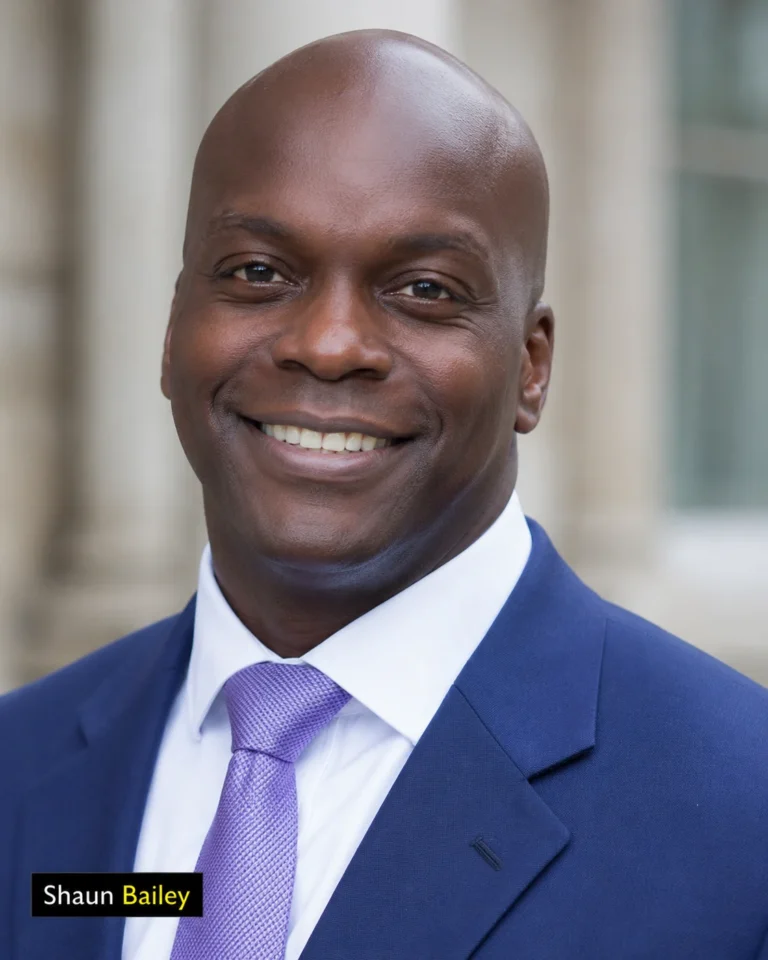
Shaun Bailey is a British Conservative politician, former youth worker, author, and member of the House of Lords who has played a prominent role in London politics for more than a decade. Known for his work on youth crime, shaun bailey,social mobility, and community development, Bailey rose from a challenging upbringing in West London to become one of the most recognizable figures within the Conservative Party.
His political journey has included serving as an adviser to former Prime Minister David Cameron, representing London in the London Assembly, and running as the Conservative candidate in the 2021 London mayoral election. Throughout his career, Bailey has attracted both praise and criticism for his views on crime, education, housing, and social policy.
This comprehensive guide explores Shaun Bailey’s background, career, achievements,shaun bailey, controversies, and continuing role in British public life.
Who Is Shaun Bailey? A Short Biography
| Information | Details |
|---|---|
| Full Name | Shaun Sharif Bailey |
| Date of Birth | May 30, 1971 |
| Age | 55 (as of 2026) |
| Birthplace | North Kensington, London, England |
| Nationality | British |
| Profession | Politician, Author, Former Youth Worker |
| Political Party | Conservative Party |
| Education | Paddington College, London South Bank University |
| Famous For | London Assembly Member and 2021 London Mayoral Candidate |
| Spouse | Ellie Bailey |
| Children | 2 |
| Current Position | Member of the House of Lords and London Assembly Member |
Early Life and Family Background
Growing Up in North Kensington
Shaun Bailey was born on May 30, 1971, in North Kensington,shaun bailey, West London. Raised by a single mother in a council house, he often speaks about the challenges he experienced during childhood and how those experiences shaped his political outlook. He has described growing up in an environment where crime, unemployment, and social difficulties affected many young people around him.
Rather than following the path taken by some of his peers, Bailey focused on education and personal development. His upbringing would later become a central theme in his political messaging, particularly when discussing social mobility and opportunities for disadvantaged communities.
Education and Personal Development
Bailey attended Henry Compton School in Fulham before continuing his education at Paddington College. He later studied computer-aided engineering at London South Bank University, shaun bailey, earning a degree while working various jobs to support himself.
His educational journey is frequently highlighted as an example of overcoming adversity. Bailey has often argued that education, discipline, and community support were critical factors in helping him succeed.
Interest in Community Service
Before entering politics, Bailey worked extensively with young people. Witnessing the challenges faced by many teenagers in West London inspired him to pursue youth work and community development initiatives.
These early experiences formed the foundation of many of his later political positions, shaun bailey, especially regarding crime prevention and youth engagement.
Career as a Youth Worker
Working with Vulnerable Young People
Before becoming a politician, Bailey spent years working as a youth worker with the Blenheim Project in Ladbroke Grove. His role involved helping young people affected by crime, drugs, unemployment, and social exclusion.
The experience gave him firsthand insight into the factors contributing to youth crime and anti-social behavior. Rather than focusing solely on punishment, he often emphasized intervention and support programs.
Many supporters argue that this practical experience gave him credibility when discussing social issues.
Founding MyGeneration
In 2006, Bailey co-founded MyGeneration,shaun bailey, a charity aimed at helping struggling young people and families. The organization focused on issues such as:
- Educational underachievement
- Youth crime
- Drug abuse
- Unemployment
- Family support
The charity became one of the most significant achievements of his early public career. Although the organization later ceased operations, it helped establish Bailey as a public figure interested in community improvement.
Building a Public Profile
His work with charities and youth programs attracted attention from policymakers and think tanks. Bailey began contributing to public policy discussions and eventually became associated with the Centre for Policy Studies.
These activities helped introduce him to national politics and expanded his influence beyond local community projects.
Entry into Politics
Working with David Cameron
Bailey’s growing reputation led to his appointment as a special adviser on youth and crime to Prime Minister David Cameron. In this role, he advised the government on policies related to social mobility, education, and crime prevention.
Working at the highest levels of government provided valuable political experience and significantly raised his national profile.
The appointment also positioned him as one of the Conservative Party’s most visible voices on youth issues.
Parliamentary Campaigns
Before achieving elected office, Bailey stood unsuccessfully as a Conservative parliamentary candidate on multiple occasions.
Although these early campaigns did not result in election victories, they allowed him to gain political experience and establish relationships within the party.
His persistence eventually paid off when he secured a position in London politics.
Election to the London Assembly
In 2016, Bailey was elected as a London-wide member of the London Assembly. The role involved scrutinizing the Mayor of London and helping shape policies affecting millions of residents.
His election marked a major milestone and provided a platform for advancing his political agenda.
London Assembly Career
Focus on Crime and Public Safety
Crime reduction became one of Bailey’s most prominent policy priorities.
Drawing on his background as a youth worker, he frequently argued that London needed stronger action against violent crime while simultaneously investing in prevention programs for young people.
His proposals often combined law enforcement measures with social interventions.
Housing and Regeneration
Housing affordability has been a major challenge in London for years.
Bailey regularly advocated for increased housing development, home ownership opportunities, and regeneration projects aimed at improving communities across the capital.
These issues became central themes throughout his political career.
Committee Responsibilities
As a London Assembly Member, Bailey served on multiple committees and eventually became involved in areas such as:
- Housing
- Planning
- Economy and Skills
- Police and Crime Oversight
These responsibilities allowed him to influence discussions on some of London’s most important policy challenges.
The 2021 London Mayoral Election
Becoming the Conservative Candidate
In 2018, Bailey was selected as the Conservative Party candidate for the 2021 London mayoral election. The campaign positioned him against incumbent Labour Mayor Sadiq Khan.
His selection represented a significant moment in his political career and made him one of the most visible politicians in the country.
Campaign Priorities
Bailey’s campaign focused on several key themes:
- Reducing crime
- Expanding policing resources
- Improving transport
- Increasing housing availability
- Supporting economic recovery
He argued that London required a new direction and frequently criticized the incumbent administration’s handling of key issues.
Election Results
The mayoral election took place in 2021 after being delayed due to the COVID-19 pandemic.
Bailey finished second to Sadiq Khan, receiving a substantial share of the vote but ultimately failing to win City Hall.
Although unsuccessful, the campaign significantly increased his national recognition and established him as a leading Conservative figure in London politics.
House of Lords Appointment
Becoming Lord Bailey of Paddington
In 2023, Bailey was appointed to the House of Lords and received the title Baron Bailey of Paddington. This appointment marked another important chapter in his public career.
The life peerage recognized his contributions to politics, community work, and public service.
Continuing Public Service
As a member of the House of Lords, Bailey participates in debates and legislative scrutiny while continuing his involvement in London affairs.
The position allows him to contribute to national policy discussions beyond local government.
Role in Contemporary Politics
Today, Bailey remains an active voice within the Conservative Party, particularly on issues involving crime, social mobility, education, and urban policy.
His influence extends beyond electoral politics into broader policy debates.
Controversies and Public Criticism
Political Disagreements
Like many high-profile politicians, Bailey has faced criticism regarding some of his policy positions and public comments.
Opponents have challenged aspects of his views on social issues, policing, and urban governance.
Supporters, however, argue that his willingness to address difficult topics distinguishes him from many other politicians.
Partygate-Related Attention
Bailey also attracted media attention during the wider political controversy surrounding gatherings held during COVID-19 restrictions.
The issue generated criticism and led to scrutiny of his role in related events.
Despite the controversy, he has remained active in public life.
Public Image
Public opinion regarding Bailey remains mixed.
Supporters view him as a self-made success story who understands the challenges facing ordinary families. Critics argue that some of his positions are overly simplistic or controversial.
This divide has contributed to his prominence in British political discussions.
Shaun Bailey’s Legacy
Advocate for Social Mobility
One of Bailey’s most significant contributions has been his focus on social mobility and opportunities for disadvantaged communities.
Drawing on personal experience, he frequently highlights the importance of education, employment, and family support.
Influence on Crime Policy
His background in youth work has made him a notable voice on crime prevention strategies.
Many of his policy proposals emphasize balancing enforcement with intervention and support.
Continuing Relevance
Whether viewed as a community activist, political candidate, or member of the House of Lords, Bailey continues to influence debates about London’s future and Britain’s social challenges.
His story remains one of the most distinctive political journeys in contemporary British politics.
Frequently Asked Questions
Q: Who is Shaun Bailey?
A: Shaun Bailey is a British Conservative politician, member of the House of Lords, and London Assembly Member. He is best known for being the Conservative candidate in the 2021 London mayoral election.
Q: Where was Shaun Bailey born?
A: He was born in North Kensington, London, England, on May 30, 1971.
Q: What did Shaun Bailey do before politics?
A: Before entering politics, Bailey worked as a youth worker and co-founded the MyGeneration charity, which focused on helping disadvantaged young people and families.
Q: Did Shaun Bailey become Mayor of London?
A: No. He was the Conservative candidate in the 2021 London mayoral election but was defeated by Sadiq Khan.
Q: What is Shaun Bailey’s title?
A: Since 2023, he has held the title Baron Bailey of Paddington as a member of the House of Lords.
Conclusion
Shaun Bailey’s journey from a council-house upbringing in North Kensington to the House of Lords is one of the more notable stories in modern British politics. His career has combined youth work, community activism, policy development, and elected office. While his political views continue to spark debate, his influence on discussions surrounding crime, social mobility, and urban development is undeniable.
As a London Assembly Member and life peer, Bailey remains an active participant in British public life. Whether admired for his personal story or scrutinized for his political positions, Shaun Bailey continues to be a significant figure in the evolving landscape of UK politics.